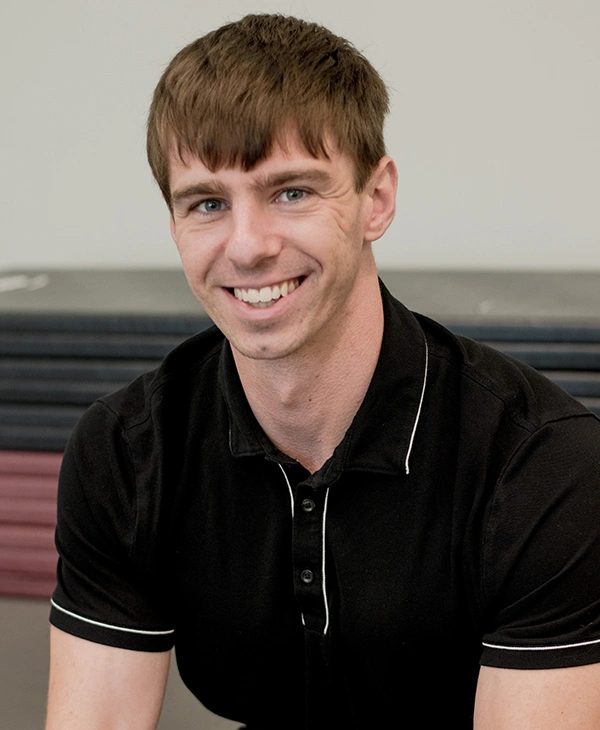
Interview with Dan Braun
Spotlight Series topic: Using Tech Appropriately in Injury Evaluations
Guest Name: Dan Braun
Guest Credentials: Doctor of Physical Therapy
Discussion Details: We discussed the importance of using technology appropriately while prioritizing clinical reasoning and personalized care. We dove further into topics like: why some clinics struggle to adopt tech-driven approaches, the importance of treating people and not the signal by itself, and using the tools in real time to guide confident choices about recovery timelines.
Benefit of Watching: Learn about how the correct use of technology during evaluations can increase confidence in rehab decisions without removing the human elements of personalized care.
Address of guest’s business: Charlotte, NC
Dan: Rick, welcome to the podcast. Super excited to be here with you today. For people who aren’t familiar with you, or maybe they haven’t seen the lab that you’ve got over in the Triangle area here of North Carolina, would you might fill them in a little bit about who you are and all the amazing stuff you’ve got going on.
Rick: Yeah, yep, and thanks for having me, Dan. I appreciate it. So my name is Rick. I’m a physical therapist. I have a lab here in Morrisville. I always feel like I need to really emphasize the Morrisville part since you’re in Mooresville. Um, well, we’re up here on the Research Triangle next to Raleigh and Durham and it’s more of a sports medicine and ortho clinic. But we have some biomechanics tools in here where we can measure human motion and performance in a couple of different ways. And you might not see a typical physical therapy clinic. So we specialize more in motion as a diagnostic sort of methodology and framework. Versus, you know, maybe we’d see it some other clinics in terms of how we run through our methods. So that’s the really, really short abbreviated version. Dan, I’m sure we’ll get into it a little bit and talk a bit more, but.
That’s the real short version.
Dan: You mentioned motion as a diagnostic and I think that’s something that a lot of people go back and forth about. That way, you know, there’s some people still diagnosing just based off of a table assessment alone versus other people doing more of a movement-based assessment, if you will. But even that concept of a movement-based assessment is all over the place, for lack of a better way to put it. Some people just rely on visual observation, others are using AI technologies, others are looking at maybe force plates or surface EMG. How have you kind of gone about systematizing this process of movement assessment and making it something that you can replicate over and over again?
Rick: Dan, I think you bring up a really good point. There’s so many different levels of what a motion assessment is and I think there’s different times when different levels of that are appropriate. It’s never to say that maybe an observational analysis isn’t appropriate, you know, all the way to a full-on, you know, biomechanics lab setup. So I can kind of walk you through what our process is here in some of the tools we have in terms of how we approach it. But I do think it’s important to note that there’s definitely different levels of this sort of, you know, way to measure motion.
Three-step process at our clinic. It takes about three hours.
They can break that up into one to three appointments, so some people just want to knock it out and they come in for the full three, you know. Others will say we’ll do the hour and a half or one part of it. We’ll do two 45-minute sessions, some combination of that. I’m running everybody through a physical exam.
So most of the time, depending on the issue. For here we’re using, you know, some sort of FMS or SIMA framework, so you’re kind of pass-fail sort of screen that’s just going to give me a sense of how you’re moving or how you’re not moving. And with those, with that method, the main concept is, as you know, many listeners probably know, we’re kind of bucketing you into whether or not we’ve got what I joke and call hardware versus a software problem. Right, like, do we have an actual structural piece that’s preventing us from moving into a certain position? Or do we have some sort of neuromotor limiter that’s not letting us get in those positions? And that’s important diagnostic, so that’s the main purpose of that physical exam. And then of course, to make sure you’re appropriate for any of the other follow-up testing.
Dan: Next piece.
Rick: Yeah, we’ll go ahead.
Dan: Okay, yeah.
Rick: And strength testing is the next one, so we use dynamometer technology about a force frame in here. Where we do isometric testing. Whether we do an upper or lower quarter depending on what you’re coming in for, and that’s going to give me a sense of what your capacity is. So I think about isometric testing as just straight capacity, like if I put you in a position, I ask you to generate as much force as possible. What can you do for me? So the isometric testing, we have a full 45-minute process for that and going through it and then I’ll do some sort of biomechan or motion capture. Part of that is the third step of the process. That’s a little bit longer appointment. Those are typically booked on 90 minutes and it’s going to depend on what you’re coming in for. So I think a good example to pick on is like a runner, right? Let’s talk about a runner with maybe knee pain, maybe to even come with a proper medical diagnosis with patellar tendonitis, because they’ve seen a doc or had imaging or what have you.
So I want to do a 3D gait analysis on them and what does our 3D gait analysis entail? Because everyone that you talk to is going to have a different level of analysis, you know, could be as simple as holding up an iPad or putting it on a tripod, drawing 1D angles, could be 2D camera, etc. So I’m using 3D IMUs. Those are basically little baby computers that I strap to you and they’re going to measure translations in three planes and rotations in three planes.
That’s going to allow me to get 3D movement data.
I use surface EMG in conjunction with that, so I’m also looking and seeing when are we getting concentric muscle activation, for lack of a better way of saying it, and I’m measuring potentiation to get an idea what your neuromuscular strategy is when you are in those positions. And then for the run gait, I am using pressure insoles too as a nice kind of analog for being able to measure force because that’s a little more challenging to measure under a treadmill directly, but it does give you a nice heat map and it turns out looking at rate of pressure development is actually a pretty good analog for looking at rate of force development.
So on the gait side or the motion side, if I have muscle performance data and I have 3D kinematic data and I also have some sort of force or pressure data depending on what we’re measuring, that’s a pretty comprehensive movement exam where I can start to peel back layers and see, you know, what makes sense or where it’s a good hypothesis or a place to start for the clinical reasoning process to start diagnosing, you know, why does X movement hurt? If I combine that with strength data, isometric strength data, it puts a lot of that EMG information and a lot of that motion data into context. So it gives me an idea of why we’re moving that layer or at least gives me a place to start.
And then of course, you know, that important physical exam, the bread and butter PT stuff, just getting hands-on and seeing what everyone’s, you know, feeling like or what those joints are moving like in terms of that hands-on exam.
So kind of a long answer. But hopefully, that gives a good perspective of.
The entry point to how we’re using that technology to create a diagnosis, like a bigger diagnosis, and then from there that helps dictate the care plans that we recommend.
Dan: To kind of summarize that, it sounds like you bridge the gap between having a visual movement assessment and more of a research or technology inclined assessment. I’ll say where we incorporate force plates, force sensors, EMG, different elements like that and then also bring it all back full circle to more of a traditional assessment style. And I think ultimately that’s the sweet spot with this, right? It’s not dipping all the way into one end or the other end. I think a lot of physical therapists out there will admit that the basic goniometer and manual muscle test alone is not enough, and we need way more than that, especially for the active populations and the athletically inclined populations. I’ll say, however, with that in mind, that doesn’t necessarily mean that, you know.
More is just more of the same stuff we have been doing, right? There’s so much more we can include in the sense of we want to. What do I want to say?
We.
Don’t want to just do more manual muscle tests, we don’t want to just do more special tests. We want to do more innovative, newer things that maybe we haven’t looked at in the past. And I think that’s where a lot of these technological components that you referenced.
Really come to play.
Rick: Right, right. Like the concept of EMG. So understanding what the muscles are actually doing from an activation and firing standpoint, the concept of force or you mentioned heat mapping, right? Like how is the foot actually interacting with the ground that way? So I think a lot of these things are really, really fascinating and really essential to look at. But ultimately it all needs to come together somehow into this bigger picture, if you will, that way, and it sounds like you’ve been able to do that successfully. But I know a lot of rehab providers really.
Dan: Struggle with that for a lack of better way to put it. You know, they understand they need these things, but they don’t understand how they all communicate with one another. You know, how do I take my FMS score and then compare that with the notes I get from the EMG, the notes I get from force plates and so on that way? How have you been able to go about systematically putting all of that together into a method that makes sense?
Rick: And I think you touch on some great points there and I’ll back up a little bit and then I’ll hopefully get back to answer your question. So focus me up if I miss it. But I think you’re dead on in terms of implementation.
Of a lot of this, and it is challenging for a lot of providers because I think we don’t. We’re not necessarily taught this way through school. I think we’re given very good.
Clinical reasoning tools and I think they do a good job of teaching didactic knowledge that we come out with a lot of just straight information and a good way to reason through some of that information. But then we get out in clinical practice, especially in the outpatient world. Or at least I could speak to the outpatient world and we don’t necessarily get access to as much information as we could to help sharpen those clinical decision-making skills. Right, and I think it’s important to.
When technology, at least what I talk with other clinic owners or other systems that are trying to implement technology. I think the challenge that they run into is that they’re trying to implement that tech into an existing.
Model for delivering care rather than let’s build a new model around the information that I want to gather to make those choices.
And that’s an important thing to bring up. I think because in order to start to do some of these things, like you said, like how do I integrate an SIMA or an FMS score with a bunch of biomechanical data and a bunch of strength data? You got to build a model that can accommodate all this, right? And it’s going to take a different approach because a patient or a client coming in kind of has a preconception of what PT is. They’re like, “Oh, I’m going to come in, I’m going to get a physical exam.” They don’t know it’s a physical exam, but they kind of, you know, they’re going to get checked out. And maybe they’re going to get some manual therapy or something along those lines. And from the very get-go, at the very beginning, I’m focused on saying this is going to be a three-step process to really figure out what’s going on. It’s going to be a little more entailed than maybe what you were thinking. And here’s why I need to know all these things.
And move and move through the clinical reasoning process to get them a real diagnostic. So at the end of it we can confidently say this is your problem and these are the sort of things that we’re going to work on as a plan to fix it. So with bringing all those tools together and the reason I have that three-step process.
Is, you know, kind of what I was bringing up at the beginning of the talk. I want to know from a clinical reasoning standpoint, what are we dealing with in terms of structure? That’s not letting you move a certain way. And what’s maybe a neuromotor problem? That’s going to give me context for when I measure certain range of motions or certain kinematic or kinetic even positions. You know, during and I’ll just keep going with the run gait analysis because that’s what I brought up before. Let’s say somebody’s having trouble getting into hip extension on a run gait analysis, say. I see, okay, you’re keeping your knee flexed for too long through mid stance. And when you go into toe-off, our knees stay in flex. We got a lot of dorsiflexion. We’re not going to do that kind of triple extension or good hip extension position well, the kinematics just tell me that you’re doing that. It doesn’t tell me why.
Right. And so if I’ve done a physical exam and I, in one conclusion, I might say, “Well, you have limited hip extension,” right? Passively, like I cannot get. You know, that is a separate problem. Then if you can’t put yourself in a hip extended position.
But in certain positions or certain orientations or if I do it, possibly I can. I can put you in that position. Totally different treatment decision than I’m going to make in terms of treating that triple extension issue with running, right? So that’s kind of an example, how I would put that into context and then also with the strength information. I actually think EMG is not that helpful by itself. You have to put it in the context of strength because if I have a limited capacity or I have a limited, you know, isometric output for it with a hip extension movement, let’s say I, you know, I’m weak with hip extension.
And I see a lot of EMG activity when I need to see it during the gait cycle. That tells me something. That tells me that it’s probably just a capacity issue, and we just need to work on glute strengthening, pretty straightforward, right? But that can be pretty confident to say. We got to come up with a true strength and conditioning solution to get back going. If I see a strong hip isometric test and I don’t see a lot of EMG activation in that position, that is a totally separate diagnostic bucket. We have capacity, but we’re not accessing it. So that’s an example of where I would use the strength information to help contextualize the EMG information and where I would take a physical exam and help it contextualize motion data.
And that’s how I start to put those things together and to your point on the EMG. For a second.
Having used EMG, it is very difficult to really draw conclusions off of the data when you don’t have that force component of it to your point.
Dan: Right. If I see how much someone is firing a muscle, but I don’t know how much force they’re outputting in that motion. Right, let’s take a classic one like knee extension. For example.
Right, if I’m trying to understand how much someone is using a VMO versus vastus lateralis versus rectus femoris versus vastus intermedius, if you can get a good read on that like in a knee extension isometric, for example. But I don’t know how much force they’re outputting in that knee extension. I feel like I’d really be missing the mark with that because all of these things are very specific in nature, right? It’s how much are they using those muscles at that specific force output. It’s going to be drastically different. If you compare a 100% MVC to a 50% MVC, right? That’s just how muscle activation works. So I think to your point we really need to make sure we get the full picture from an assessment standpoint. I think a lot of times people make the mistake of only getting half the picture and.
Trying to draw conclusions off the half that they have. And then later on they wonder why they hit a wall or they wonder why things didn’t work out and they’re not going their way. And it’s like. Well, it’s pretty simple. We need to look at everything and account for everything and not just look at a portion that we want to look at from a convenience. Or, you know, because that’s the only tech we have kind of component, if you will.
Rick: And let the whole approach, like trust the process, right? And reiterate or iterate your process and make it better, but.
Capture the information, hone in on a couple of variables. Then obviously our job as clinicians is to not make it too complicated to say like this is a plan. These are things we’re going to attack, and these are the changes I expect based on like things I can measure. I can retest it and remeasure it and make sure that we’re actually, you know, making those changes. And I think you’re dead on that. For me, the reason I’ve been pretty stubborn, you know, lately on this, like doing it, this actual three-step process is when I try and cut those corners and I say. “Hey, we’ll just do a physical exam.” Or, “Hey, we’ll just do strength.” Or, “Hey, I’ll just do motion,” right? Because I have other clinics or other groups that are just interested in getting the motion exam, it’s understandable. I get it. But if I just do a 3D gait.
And I don’t have strength. I don’t know how to put your EMG into context.
If you have a motion problem. I don’t know how to put it into context in terms of, “Well, I don’t know if it’s a neuromotor problem. I don’t know if it’s a structural issue because I haven’t laid hands on you.”
Right, and so back to the kind of incomplete picture, yeah, and it just, it almost is like, well, there’s these other questions that I need answered, and I just found at least where I’m at in my process. Currently. I mean this could change as things, you know, go on and more technology become available. But that’s just how I’ve been able to get the most complete picture to be more confident on making decisions in terms of picking those interventions. And then, you know, from a client standpoint, it’s like, “Well, why can I be confident these are the things we need to do. And these are the things we need to change.” And then one of the things I just wanted to touch on, you were talking about MVCs with EMG. I mean we could go down a whole rabbit hole and probably do a whole podcast on it because I think I think it’s really messy data and it’s hard to use. But it’s so valuable if you.
If you can build a process that accommodates getting good signal and understanding how to use that EMG data because I have thrown out a lot of my previous knowledge on, you know, expectations for using certain muscles in certain positions. If I coach somebody to be in the right spot, having done EMG now is as most of my, you know, for almost all my evaluations.
I need to see what muscles you’re using to even be in those positions because like Dan, if you and I go and find like ten people off the street and we all coach them into a good squat position depending on their goals. Even if it’s, you know, “Oh, you’re gonna do a quad-biased squat or you’re gonna do a hip-biased squat or whatever it is,” I’m going to put everybody into a hip-based squat, let’s say, they might be using a totally different neuromuscular strategy to hold those positions or move through those ranges of motion.
Even though positionally I’m happy with where they are and to your point. I think having that understanding especially because strategies and activation do not always go hand in hand, right? I think there’s so many classic examples of this, from the knee-over-toe being better for quad activation to vertical trunk being better for quad activation. Over and over and over again, we come up with these, you know, dynamic systems theory influenced positions where we try and eliminate the ability for someone to compensate and force them to load tissue that we want to target. However, the body is really, really good at compensating. It’s insane at compensating and as a result.
It has ways of not using the tissue we want it to, right? So we need to know that and we need to understand that just because the mechanics look a certain way doesn’t mean that’s actually what’s going on and to your point on EMG as well, just being.
A deeper dive. I mean, one of the big things I think people misunderstand about it is, they think either more activation is good like they’re using it more or not enough activation is bad. It’s inhibited when in reality it always depends on going back to what we said before about the force output. Right, like, say, I’ve got really, really low activation of everything through my leg, right? Quads, hamstrings, gluteus, calves. Everything is lower than we expect, but force output in, let’s go back to that isolated knee extension for a second, is ridiculously high. Well, if they can produce high amounts of force without a ton of activation that tells me they’re running with a very efficient system, right? Maybe they’re just really strong. Right. We’ve got a Ram truck that runs at the efficiency of a Prius. I’m not going shut that down to go all in on that, right? So I think having that context component to all of these things is always essential. So.
Rick: Yeah, couldn’t, couldn’t agree more, could not agree more, and that goes for more than just the EMG signal. That’s all these different signals. And I think with a more traditional, you know, physical therapy kind of practice model. We have to rely so much on the physical exam.
And look, I love the physical exam. I think it’s a key component. I think it’s kind of a dying art outside of our field.
And I think you know there’s a lot that can be.
Deduced from that exam. So I’m not. I’m not downplaying a physical exam-heavy evaluation approach, but to me, it’s just one-third of the picture.
It’s never the full thing. It’s always how the pieces come together. I think part of that art too, is not just how they come together for you as the clinician, but as you started to hit on that way, it’s how you also share that with your patient or client that you’re working with. And I think part of that becomes the game of data visualization if you will, and these spreadsheets and Power BI or whatever system you like to use enters the chat, right? It’s it’s one of those things where it’s like I have all this good stuff, but if I don’t present it in the right way, none of it matters unfortunately, and that—
Dan: Yeah, and that’s even a whole separate conversation. But I think there is a lot of clinical value in making, like we. We might have a way of thinking about a problem or we have our own diagnosis in our head. But just making it external, like putting it on a report, got to make that report simple, right? But putting it on a report or throw it up on a screen and just being able to show somebody what they’re doing.
It’s real now. It’s real for them, right? It’s not this, “Oh, take my word for it. I’m telling you you’re not doing this, right? You better listen to me.” It’s like, look at your position.
Look at the strategy that we’re seeing on the EMG. Look at the force vector, right? I’m doing 3D force in here and like, look at these things and here’s where they should be and let’s work on that. I love using these tools and, and this another way to talk about leveraging. Some of these tools are great for the diagnostics like we really focused on for this conversation. They’re awesome for treatment too.
Biofeedback is in different flavors, like whether it’s EMG biofeedback, whether I’m using the force plates of real time, doing 3D vectors, whether we’re just looking at 1D force traces, I got a more typical force plate setup. Those are all things that I think too, and the treatment side are really powerful because it’s almost this very easy gamification, or at least setting the expectations of what you know. You’re asking the patient or client to achieve right there in front of them, and I can just let them kind of troubleshoot it in their own mind for a little while, almost say less, and you know, the art of being a clinician at that point almost comes down to you. Am I giving the right cue? When do I pull the cue away? When do I give the feedback properly? When do I give less feedback and pull that away and help those patients start to become independent in detecting when they’re doing things correctly?
Dan: To your point on the treatment element, I think it’s almost a little bit of a balance because I think on one hand giving that feedback opens up so many different options as you just hit on. And one of the things that gets discussed a lot is this whole concept of gamification of training, how there needs to be a number, it needs to be used for engagement and entertainment and competition and all these different things. But on the flip side of that too. I think there’s a lot of training situations or treatment situations that arise, especially in athletics, where maybe you don’t have access to everything you want and it’s kind of suboptimal conditions and I think it’s also a balance here of the mix of both. It’s like on one hand I think that before you go into the weeds in the deep end with the technology, I think you need to learn and appreciate how you can make it work and get results when you don’t have access to anything. But on the flip side when you do have access to everything and.
You’re not able to just assess with it but also treat regularly with it. How you go about developing that treatment parameter guide, if you will, to use everything can really make or break it. And this is an area where I really enjoyed using the EMG as well. I used to. I called it like an audit of the programs, right? It’s like, “Hey, let me run through rehab programs that I’m doing with people and just take a look at the activation of our target tissue and take a look at the loads that they’re on for those exercise.” Maybe it’s, you know, Bulgarian split squats or barbell squats or whatever. It is that way. What are we actually getting from a tissue activation standpoint and does that match? What we’re trying to do when.
Rick: Interestingly enough we were able to tweak some of those to get way more activation out of our target musculature just by kind of using it as a little audit sort of thing afterwards. Standardized MVC. I always standardize MVC each time with a max effort isometric, so I’m the same way because I don’t know how you can interpret EMG without it. I know there are plenty of methods out there with people that are having success just looking at signal, raw signal, right? But I like my brain doesn’t work this way. It sounds like you’re the same way like I need to reference it against something.
And for me it doesn’t even necessarily always have to be a strict like force like max effort like isometric.
Contraction but I at least need a reference movement.
To compare against, right? So even if that’s like, you know, anyway we could, we could talk about that. Right. But totally I think you need to normalize EMG data, so you can’t compare it for us. Yeah, you take compare some muscle group.
Because it’s noisy data and you know, if you drank more water before you came in, you’re gonna put out more or less like it should there. There’s just so many.
Finicky things that can change the signal. You absolutely have to reference it. So yeah, you’ll find different positions for different muscular groups and you’ll find, you know, for the quad, do you use 60 degrees in election or 40, and some might say this for the rectus femoris and this for the VMO. Ultimately, I care a lot less about your specific setup, as long as it’s the same freaking setup each time. Actually, don’t change it from one to the next. Just use the same setup each time. And once you’ve done that, you can start to draw meaningful conclusions. And one of the things that stood out to me was the effectiveness in the rehab population of pre-exhausting some of these muscles, especially Quad post ACL or Calf post Achilles and then moving into the compound movements. And I know a lot of times people start with compound movements, but this was an area where I found if we actually isolate, then go compound and then if there’s anything left in the tank, crush it with more isolation at the end, that seemed to work ridiculously well for us. I mean.
Dan: I like that. That’s interesting to compare notes, because.
Sometimes I’ll even see a little bit of a different flavor of that same thing. Like let’s use the ACL example. Somebody’s having true, like, central nervous system activation issues in their quad post-ACL, like we all see this, right? Anybody’s treating ACL knows that, you know, there’s a neurological issue with trying to get activation even sometimes 12 months post. Like they’ve gone through the rehab and then you see them. You’re like you’re still not getting good downstream activation and.
I can measure these things directly. I’m like, let’s put an EMG on. Let’s do a quad, so okay, we’re not producing force and we’re knocking that dilation. That’s a pretty straightforward diagnostic to me. If I keep trying to load, it’s not going to help, right? We have an actual activation problem. We got to learn how to fire that thing. Sometimes, Dan, I have been. When I take somebody that comes in with that, I’ll move them into a compound move. I’m like, let’s just work on squats, let’s just work on squats with the EMG on. And let’s see if we can get the quad to wake up in a closed-chain position.
You know, we’re loading more, we’re actually doing more work that wakes it up. Then we go back to the open chain or we go into the ISO and then suddenly they’re getting better downstream of activation, putting that way more force, right? So back back to the kind of.
Individualized Care. Tailored Care is another soapbox I can get on, as a lot of places say they do Tailored Care, but I’m like, but if you’re running everybody through the same protocols for the same diagnosis, is it really tailored care, right? If you can measure things when you come in and kind of, you know, back to the car analogy, I joke and I have guys come in and they’ll. If we’re working on some lower extremity thing, I’ll just have them get on the plates. I’m like, just do some bubbles on the plates, then working into squats, then working into your pre-takeoffs and then working into your bunny hops. I just want to see what your force trace curves look like today because I don’t know if you’re just having a day where you’re moving like crap or if you’re having a day where things are moving, moving great, right? And just being able to measure these things between sessions when you come in and just do a pulse check every time, I think that that’s so powerful and other healthcare professions do this.
Right, you go into primary care, you’re gonna get like a blood pressure, you know, or whatever. Like we need to start having.
Something to kind of get a sense for how you’re doing that day as well. I think that there’s so many different ways you could have that kind of daily regular movement check, if you will, that way or some kind of objective assessment. And I think with a big push in the physical therapy profession in particular, to move towards a primary care model, if you will, I think that in order to do that, we have to be able to really, truly be the movement experts, and part of that is having those assessments that we can do every single time with someone, right? It has to be a daily thing and the more you watch someone move, the more numbers you collect objectively on someone, the more accurate everything that follows is going to be. I think a lot of times people think of this stuff as like, well, they did three countermovement jumps on the force plate and now I can draw all these conclusions and I can make all these decisions and life will be good. But in reality we need way more than.
Three data points in order to make those types of decisions and I think that a lot forget about that and I think the more you can kind of map this out over time, the better your decision making is going to become. One, two, again, we move towards that primary care type role that way, this is where the future would be. In my opinion.
Rick: Well, how awesome would it be and I think this is starting to happen in sport settings. A little bit, although correct me if I’m wrong, but I’d like to see it happen more in traditional ortho too. I want healthy baseline.
Like I want to know if somebody gets injured. Ideally, I’m not comparing you to like normative data. I’m comparing you like, how are you moving when you were healthy.
Like pre-ACL. What did your 90-degree cut, what did your linear D-cell, and what did your drop jump look like, right? And get you back to moving like you when you were performing well. So it’s almost, you know, backwards thinking. You know if you’re having a good game, you’re having a good day and you’re moving really well. It’s almost like I want to measure you then.
I want to measure you when you’re performing at your peak or when things are going well because that tells me kind of where you’re at on that front. And then if there is an injury or there is an issue, to have some context, to be able to refer back to.
And get a sense for, well, how much did the movement actually change? Because the other flip side, I think, to the kind of more biomechanical approach, a reasonable argument is, well, what conclusions can we draw from the movement data? Is a biomechanical model truly representative of, like, you know, does it actually capture pain principles? And how does it play with pain science and all of these things? And so I think part of that challenge is what we’re trying to take these biomechanical frameworks and compare them to norms when we know people have varied movement across individuals and they’re going to have different movement profiles. So in a perfect world, I would kind of get a sense for how everybody moves. You know, what sort of mover are you? What sort of profile do you fall into to get a sense of where we should move back towards.
Dan: What’s your main way of bucketing or profiling someone from a movement-based standpoint to what you just brought up that way? Because when I stop and I think about this, you know, Rick, I’ve seen a lot of different profile examples. One of my personal favorites is actually.
Profiling the type of training we do for someone that day. I.
Believe Tim Kelly was the one who educated me about this initially, but he used animal examples. So like Cheetah days versus Rhino days versus Beaver days, right? You know everyone knows that cheetah is fast, so on a cheetah training day you move fast. Everyone knows rhinos are big and strong. So on a rhino day you get big and you get strong. And on beaver days everyone’s heard the busy beaver analogy, so it’s just general movement. A lot of general movement, right? So I like having analogies like that and I think there’s many different ways to do it. And I always love hearing kind of what people’s new ways of doing that is.
Rick: So I’ll tell you how I think about that. It’s a little different. The examples you were giving me make me think more of like thematic days, like these are the how we know we’re gonna like have a sort of theme in the sort of intervention of what we’re doing on that day. Like you know, like you were talking about, like it emphasizes we’re going to do fast training today or we’re gonna do like slow heavy movement training today.
You know, when I think about movement profiles, I think this is an area that.
As the evidence gets better, hopefully there’s more to refer to and I want to circle back on my evidence conversation once I’ve answered your question. But I’m, I’m looking at things, you know, always in context of what the issue is. So if we talk about somebody who’s got knee pain with a squat or knee pain with running like.
I kind of want to know what your natural state is. So are you when you do a squat like? Naturally, are you more of a quad knee or you more of a hip bias when we end, does that translate into when you’re doing linear deceleration? So you know one test I’ll do is a 20-foot basically sprint stop on one leg 90 degrees in back? Pal. Okay, well, do we have big forward trunking? Do we have a lot of hip movement? Do we have more of a knee bias and what does the muscle profile look like? And so that’s kind of how I start to get a sense of how somebody moves. Like, do they prefer hip strategy? Do they prefer a knee strategy? If I say one’s better than the other? But it does help me put it in context in terms of, you know, what we’re treating. If they’re knee on one and hip on the other, then you know, maybe we have an issue, or maybe they’re an asymmetric athlete.
Good example of the asymmetric athletes I like to talk about are like picture like, like thrower, right? Well in your early part of your wind-up before you hit kind of that equal opposite position or the cracking phase, like are we hanging a hip or are we hanging a knee? It’s not to say one’s better or worse than the other one, but what’s your preferred movement plan, right? What do we do when are we hinged into hip? Are we hinged into knee before we start rotating in transverse plane and delivering energy? Are we a toe tapper at front foot contact? Or are we heel tapper? Those sorts of things. And if you talk about a runner, are we a forefoot striker? Or are we a rearfoot striker? And I am not. I’m of the mindset that you can be both. It just needs to make sense for the rest of your kinematics and the rest of your motion.
So those are just some examples of how I might bucket people depending on, you know, what I’m assessing and what the kind of motion project is, for lack of a better way of saying it.
Dan: And I think one of the traps that I’ve fallen into with that personally in the past is I.
Assume that as I bucket or profile someone that they’ve always been in that bucket and that’s not the correct assumption to make, right? A lot of these different athletic individuals kind of jump around or move around from one to the next that way, especially as they develop. So I think it’s important to note that to your point this is a very fluid assessment and fluid profile, and regardless of how you bucket it, it’s not so much as everyone always fits into one nice neatly and they’re going to spend the rest of their career in that one spot. There’s going.
To be some overlaps between buckets and there’s also going to be some times where athletes switch from one towards the next. As you mentioned in the running example, you know there’s been some cases in the past where I see someone switch their mechanical strategy when they’re running and to me.
That could be why they’re coming to see me in the first place from a PT standpoint, right? Like we have a new movement strategy. Why did we adopt that strategy? What is that doing that’s contributing to their complaint of why they’re indeceiving me, right? I think that the more questions you ask yourself about this and understand that this is the profession of it depends as the best answer at all time that what’s can be frustrating, but also holds true at the end of the day clinically.
Rick: And maybe your version of this too, and Dan, you can tell me if you’ve run into this, but like how often have you so back to the movement example? Have you like worked a problem backwards? So by the time they call us like they’re probably on their like third, fourth, fifth movement strategy, right? So they got left-sided knee pain and you do your whole exam. Or you run through my whole three-step process. And actually it’s a motion issue on the contralateral knee. And it’s not so much that like there’s an issue there, but it’s like.
Weakness, stability issue. Right knee now we’re overload and left knee. You know, we only have two knees, we can’t go to a third one, you know, sort of sort a situation where as you work it back, you’re actually kind of treating contralateral side addressing stability problems and lack of loading, not wanting to load that limb due to low-level pain or due to just strength capacity problems. But it’s manifesting as contralateral knee pain because we’re sort of, for lack of a better way of saying it, being overly dependent, overly loading that other limb.
You know, that sort of thing too. So I think you’re totally right. I think it’s normal for the body to adopt different layers of different movement profiles, and that’s why what you know we were talking about earlier. I would love to see when you’re healthy because that would tell me kind of what your healthy movement profile is. And did we stray away from that because of a problem? Versus, is this just how you prefer to move?
Dan: To your point there on the contralateral example that you gave, there’s a quote that was first introduced to me by Andrew Hauser. That really shifted a lot of how I treat that says he who only treats the side of injury is lost. And I think a lot of times that can kind of bleed over into how we assess athletes as well, especially in relation to the influence of technology in our assessment, right? When we start to incorporate EMG and force plates and so on that way, a lot of times we start to look at the side that’s injured or painful and try and figure out what’s wrong and what we need to change and what’s going on when in reality. Sometimes it’s the other side that we have to look at. That’s causing that side to injure. And that’s always an interesting conversation to have with someone about how, you know, yes, it hurts on the left, but we need to treat the right to fix the left. You know, that takes a little bit of that buy-in grab. I guess you could say, if you will. But with that in mind. I think it’s essential to be grounded. And almost like I. I personally tried not to even like take that.
Left versus right side, involved side, painful side, whatever you want to call it, into account when I’m looking at those numbers because I think it kind of skews your interpretation of it, and I think to that point as well there’s a.
I believe it’s, I forget the name of the law. But there’s a Goodhart’s law that says when a measure becomes a target, it ceases to become a good measure.
I think that’s also essential for us to note here, whether we’re using this for assessment purposes or training purposes. The minute that we pick one metric out of our eight-page force plate report and make that the target, “Oh, we just need Peak Force to be 500 newtons higher and then we’re good.” It’s no longer serving the purpose because now we’re focusing on the minute.
Things or the specific things that we assessed at one snapshot in time, as opposed to assessing, you know, the athlete as a whole and a big picture at the end of the day, we cannot dilute. We cannot simplify this to one or two metrics. We really have to take everything into account and you can get in the whack-a-mole trap there too, right? It’s like, well, I’m gonna hyper-focus on the one metric. Let’s fix that. Oh, well, we’ve got an athlete in here who’s like you said, humans are good cheaters. Well, athletes are even better cheaters, right? And that’s not. That’s not a diss. Like you’re a good mover. You’re a good performer. Part of that is being able to like dial up a different movement strategy and be able to get that done. So, yeah, I agree. If you focus on one, you’re probably going to cheat somewhere else or something else happening. But then how do you use the framework, you know, to make decisions about when to move on? And this is just, you know.
Rick: Clinically, how I have addressed this issue is I use it as more of a path than I do as like a, “Okay. Well, when we hit this thing, we’re good,” right? It’s like. If so, I’ll keep using the runner example. If I know we’ve got a contralateral knee issue or I do measure a lot of anterior pelvic tilt in loading response, but like they’re coming in for a knee problem and I also think they don’t have enough knee flexion, hip flexion and loading response. All these things I want to work on. Well, let’s just create a path. Let’s work on some direction, whether we’re going center out or whether we’re going floor up. I don’t care. But let’s focus on the low-hanging fruit but not lose sight of the fact that we address one thing. It’s probably going to reveal whatever was going on before that and before that, so we might add more knee flexion. We might add more hip flexion in loading response through some of the intervention tools. Great, now we’ve got that. Okay, now we’re in a lot of anterior pelvic tilt, even though now we’ve got our.
Knee position in our hip position where we want it and you’re still having some back pain. Okay, great. Let’s not lose the knee and the hip. We’ve measured that. We know it’s good. Now we can leave it there. Now let’s focus on this next thing. Okay, now we got pelvic position at the right place. What’s going on? Now we got a little bit of pelvic drop. Okay, well, now we’re going to keep that straight, so that sort of.
Feels like herding cats sometimes, right? But I think it’s. I think it’s important too in the methodology standpoint, like you said, to not get too fixated on one thing and understand that as we make changes, it’s going the rest of the system’s going to respond. So you have to kind of push it in a direction to make a more global change and that that’s a hard thing to do. And I think that’s where I think if you’re going to take this sort of approach to treatment.
You got to kind of specialize in it and go all in and this comes more to like a more of a model standpoint, care delivery standpoint. I don’t think you can dabble in this. I don’t think it’s like, “Oh, we’re also going to throw gait assessments on top of our. You know, the rest of our clinical practice model or we’re also going to throw dynamometer testing on top of our clinical practice model.” It’s like, like you got to incorporate it, you got to use it all because I think you bring up a great point. You can get trapped and.
We’ve come up with a number of examples of that on this talk where you can get trapped just using one piece, right? Well, now I don’t have enough information to contextualize it, or I’m attacking one metric and I made that change. Now suddenly I can graduate you and you’re all, you’re all good because we got 500 more newton of Jeff force, right? You. And that’s the other trap. So yeah. I agree the methodology is challenging, but you got to kind of think about where you’re going to end up with it from the get-go, Rick.
Dan: Has there been any.
Mistakes that you’ve made yourself as you’ve tried to bridge this gap between research and clinical practice or has there been anything that you’ve done and said, “You know what, this just didn’t pan out like I thought it would. This wasn’t worth it like I thought it was gonna be.”
Rick: I mean, of course. I think good process is built on a pile of mistakes, right? Um, so I can cherry pick a couple of them. You know, I think the implementation piece of as I’ve started to bring technology, it was I usually found that trap early on to say, “Oh, I need to measure joint angle. That’s going to tell me a lot. Oh, I need to measure force trace. That’s going to tell me a lot,” and just treat. Treat the signal, right? I’m gonna treat the signal. I’m gonna treat the EMG output. I’m gonna treat the force. It’s like. No, you’re treating a person, right? So it’s easy to get so locked into the data process. And it’s easy to make mistakes and say, I’m going to treat the signals.
But I think you got to remember and you got to tie it back and this is like at the very beginning of our conversation. You alluded to this. You still gotta blend it, right? It’s not a fully robotic, science-based approach. You’re still dealing with somebody who is going to have variability day to day and you have to communicate with them and it’s, it’s a, it’s still a service, it’s still a person-to-person relationship and conversation, right? So I think it’s easy to get in the weeds on the data stuff and say, “Well, well, you just you’re just not making the changes I want to make.” Or, “Oh hey, look the data looks great. Why aren’t you feeling better?” Right, kind of two flavors of the same problem. So you gotta. I think you gotta remember that even if you do have all these tools and all this insight, it’s still, it’s still a person thing. And then I think the other challenge too, sometimes I struggle with the evidence.
Based concept because as much as I’m a nerd and I love to dive into the studies and I make sure that my protocols follow the studies to the best of what’s out there. There’s a lot of stuff that’s understudied, or there’s a lot of stuff that’s studied really well. But because it’s studied so well, we miss kind of the case studies or the end of ones in those groups.
And I think I’ve realized as somebody who’s implementing some of these tools and kind of more of an innovative process that you can’t, if you’re going to be fully 100% rooted in evidence-based practice and say all my methods, everything I do has been 100% studied, and it’s only things that have been proven well, you can’t ever innovate and make progress from a methodology standpoint, either, right? So I think from a challenges slash mistakes context, you almost have to kind of ebb and flow between what’s out there and what’s published. And how do I best replicate it versus how do I take a person that’s in front of me? Who’s an N of one, and you almost have to treat them all like a case study and investigate a problem.
And the tools let me do that too, because everybody’s kind of their own N of one case study. And I form a good null hypothesis on what I think is going on using clinical reasoning skills and using available evidence. But then I test it, and it’s funny, because sometimes even during a session, this is where you have to be comfortable with, you know, with yourself or with your patient, I’ll have a good theory. We’ll run through the test. Let’s say here’s what I think’s going on. I think you’re doing X, Y, Z, we’re gonna do this cue, this exercise. We’re going to remeasure real time and we’re going to see the changes. We go through it, and it’s like everything that I’ve been coached or taught to do. And I throw it up on the screen. I get the exact opposite effect that I was going for.
You’re like, you know, great. I thought that doing this thing. I thought cue, and you do a little bit more of a posterior tilt during a squat was gonna like, get us more activation and do all this. I just measured it and like, you’re actually worse. So we need to go in the different direction or we need to experiment in that way. So you know, it’s almost like the stakes. They’re just gonna happen as part of the, like, transparent process of measuring everything too, and you just have to be okay with that. How did you respond to that cue? Okay, that cue should have worked for you, but it didn’t. Let’s own that and let’s try different direction, right?
Dan: I love that concept and I love that breakdown, Rick. And I realize even though we’ve hit this for about an hour now, we’ve really just scratched the surface at what all goes into this overlap, if you will, between the research world and the clinical world and how many different things go into utilizing.
Technology clinically that maybe we don’t always think about that way and I think this is a great breakdown that way. Is there anything we missed as we were chatting today or anything else you wanted to discuss with people listening?
Rick: No, I think this was good. I mean, I could do this for three hours, so we got to cut ourselves off at some point, right? You know, so? Uh, maybe we have to do another topic and dive deep on these sorts of things. The only question I’d leave you with because you know. I know the kind of theme of this talk was sort of implementing the different tools and different technologies like. Do you have any kind of zingers or thoughts? In terms of this, this challenge between, you know, I’m purely evidence-based and I only use things that have been studied previously versus this, “Well, not everything’s been studied and we need to kind of innovate and move forward” sort of debacle. Like how does that manifest in your own clinical practice? Because having met you and us having discussions like, you know.
Most other clinicians that I talk to. You don’t have as much of an understanding of more of this sort of sports science. And you know, approach. And you know, we met. I think one thing we connected on, you know, big time was, “Oh, hey, we’re using these tools,” like, you know. I don’t meet a lot of other people to do that. So I’m sure that you’ve run into this sort of debacle as well. And I’m curious how you wrap around it. Maybe we can leave everybody with that.
Dan: Yeah, so personally, for me, it always comes back to the mechanism, right? How are we actually accomplishing what we’re accomplishing? And there might not be research on the specific protocol I’m using or the specific exercise that I’m using. Sometimes we make up exercises on the spot. Movement as itself exists.
But it doesn’t exist, right? Like, you know, we might call something a squat, but your body doesn’t know intuitively, “Oh, that’s exactly what a squat should look like and feel like,” like it literally figured it out as you grew up and developed that way. So I think with that in mind, like you always have to have an understanding of how we’re doing, what we’re doing and why we’re doing it and it all comes back to the underlying physiology. The underlying neurological component, like there has to be a mechanism for how we’re accomplishing things, right? So maybe someone comes in, see me and the assessment says, “Hey, look. Our quad is weak as piss,” right? Like we just have not.
We’ve been dealing with inhibition post-ACL way too long, we’ve got to blow the quad up. Well, there’s a few different ways to do that, so it’s like. Okay. Maybe I’m going to go more the addressing the atrophy and we’re going to build a bigger quad. Now I’ve got to go along the hypertrophy principles. So what are my set and rep schemes going to look like? What is my session structure going to look like? If I’m going to include technology? How can I use technology to enhance that main goal or start to lay the foundation for the next phase? Because just because we build a bigger engine doesn’t mean it’s going to run flawlessly. The first time we take it out on the road, right? We have to do other fine-tuning adjustments to it before we get the performance that we want. So maybe I start with hypertrophy. And then from there.
Maybe now it moves into a specific quality. Maybe it’s eccentric braking components, right? Like, hey, look, we’ve got a muscle that’s big and it produces enough force isometrically. However, we haven’t figured out how to actually use it to pump the brakes and cut and change direction, and so on that way. And I know there’s very well-developed change-of-direction progressions out there. But ultimately there’s times when the athletes are not comfortable with level one, but they’re comfortable with level ten. So.
I personally, to the point they made about the individualization component before I look to bridge the gap between the two and say, “Hey, look, this is what.
Level ten was proposed to be. How can I scale that back?” So it’s closer to level one but still gives the same appearance and same feel as level ten because there’s times when it’s just not appropriate to make that big of a jump, but it’s valuable.
Information and I think that you have to have that have everything you do rooted in something, but that doesn’t mean that that rooted foundation is always going to take you 100% of the way. There’s a reason that trees don’t have one single root to hold them up, right? There’s.
Multiple sprawling up and I think the same component is true. Here is you can have one that’s really, really deep. You could be all in on FMS and SIMA, that’s fine with me. I don’t have a problem with it. You could be all in on Postural Restoration Institute. Fine with me. I don’t have a problem with it, but if you don’t have the ability to kind of downshift and switch to a different gear when it’s needed, that’s where I have an issue is. There’s not one thing that solves 100% of the issues. So ultimately, whatever you do, as long as it is grounded and rooted in some kind of mechanism, that’s plausible and makes sense. I’m for it and to you what you said earlier, repeatable, right? And I think, um, you know, being able to retest obviously is a big part of it. And I think where you and I connected is, we have tools. We use them, but I’m using it to feed the clinical decision-making process. I’m not using it to think for me. I’m not using it to make the decisions for me, right? It’s supposed to enable the process, process. So kind of.
Back to blending it into a model, all needs to come back to where your clinical reasoning tools are and meet the person, right? Not just the data, don’t treat the signals, treat the person, just meet them where they’re at.
Rick: It’s funny, you mentioned the level one, level ten thing, because I’ve seen it in different flavors too. It’s like, “Okay, you can’t for some reason are not comfortable doing a linear D-cell, but you’re great doing a 90-degree cut. Technically a more, you know, a more progressive movement. But for some reason, once you add another move or another direction, you seem to do it well. So let’s take the components of the cut, and let’s turn it into a dodge, which wouldn’t be, you know, a textbook way to treat somebody exactly.” So sometimes it’s also one of those things that the textbook is never going to be the most up-to-date source of information. Unfortunately, and even research studies as great as they are, and as many as I’ve read. I tend to learn more by talking to the people that did the research. Yeah, because.
Unfortunately those studies usually get bogged down about 12 to 18 months before they’re published, give or take, and in that time our understanding could have changed drastically. So I like to go right to the source with a lot of these things, which again everyone’s different. That might not be the preferred method for everyone, but it certainly.
Served me well thus far. I feel.
Dan: Yeah, no, that makes a lot of sense because there’s a lot of nuggets to get lost too in the research side because you eventually, in order to uphold the standard of what you hope the research is, which I totally respect that level.
Of criticism or critical kind of threshold is gonna wash out some really useful stuff too, right? That maybe won’t make it into into study.
Rick: Absolutely.
Dan: Absolutely.
Rick: Rick, for people listening and they want to find out more about you online and that sort of thing that way. Where can they find your website? Where can they find you on social media, that sort of thing?
Rick: Yeah, so the clinic is called Anthrokinetics Physio Lab. Dan, maybe you’ll be able to throw something up on the video edit with the with the link, but it’s just www. Anthrokinetics. Dot. Com. You can reach out on the website. I offer phone calls, so if you want to go over a call, just talk about what’s going on to see if this sort of methodology is appropriate for you and just want to have a conversation with me. I’m offering that to anybody who’s listening and then you can get more information there, so that would probably be the best way to do it.
Dan: Absolutely. We’ll link to that in the description below. That way, if you didn’t quite catch it, you can just click there and see everything that Rick is up to. Rick, this was awesome. Thank you so much for your time.
Rick: Yeah, Dan. Appreciate you having me and, um, until next time.