Interview with Chris Newport
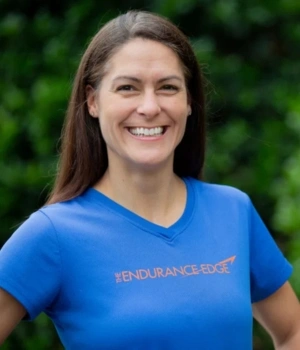
Guest Name: Chris Newport
Guest Credentials: (Performance Dietician) MS, RDN, LDN, EP, CISSN
Discussion Details: Chris Newport of @TheEnduranceEdge hosts @Anthrokinetics Rick Pitman to discuss why durability training should be a primary focus for runners. In this interview, we go into depth on what an evaluation actually measures, the differences in levels of gait analysis, and why runners should care.
Benefit of Watching: Runners can gain insight into what they can do to help with making themselves more durable, learn more about the different levels of gait analysis, and why runners should care
Address of guest’s business:
275 Convention Dr,
Cary, NC 27511
Rick Pitman: Yes. We’ll just cover all those topics. We’ll cover years of content in 30 minutes. years of education and experience just all in this little Yeah, we’ll we’ll try and put it into something digestible here. So, that’s good.
Chris Newport: Yes. So, Rick, give us a little bit of your background. How did you get into this wonderfully fantastic nerdy spot of yours?
Rick Pitman: So, I’m a physical therapist by trade, but I was studying human movement long before that. So, I’ve got over 15 years of experience kind of doing biomechanics based stuff. Um, so I had a few years under my belt before I went to PT school. Uh, I’m a west coaster, grew up in Pacific Northwest, did all of my schooling out in Oregon, had great access to the labs out at Nike and Beaverton, and then of course the exercise science labs at a small schools called Pacific University. Um, and got to play with a lot of tools. So, it’s neat to see how they’ve those wearables have evolved. Um, I was on the ground like first looking at those triacial accelerometers and the wristworn stuff. we were throwing them on firefighters and figured out how they work and how to get those algorithms to actually give us information on movement and how to measure activity from all this noise. So published some stuff uh as an undergrad doing that work and then when I went to graduate school I realized hey this technology is vastly underutilized on the clinical side um on the PT side because we can actually measure some of this stuff that we’re maybe using you know less objective tools to make decisions. So, it was nice to wear that hat going into PT school and getting a doctorate degree because I was always asking those questions all the way through in all my clinical rotations. How can we measure this stuff better? How can we measure this stuff better? So, uh, once I graduated and got a few years under my belt running a couple different practices, uh, one with the team physician for the Oakland Athletics, one with a multi-disiplinary group out in San Francisco, uh, 2018, I decided to go out on my own and say, “Hey, we’re going to have a practice that really focuses on the diagnostics and the measurement part of the problem and let that drive a lot of the clinical decision-m.” So, a very kind of different way to think about how to manage injuries. did that out in California for about six, seven years and then my wife and I moved back or moved out here. She moved back to the east coast. We came here to North Carolina um December of 2024. Uh I’ve had a chance to work inside of a couple other practices, getting my feet wet around here and getting a sense of the the land and am opening up a practice here uh in a month. So, we’re we’re getting up and getting geared up for grand opening. and I’ve brought all my lab equipment and I’ve brought all my fun stuff and I’m here to start implementing that stuff to see how we can start making changes. So, that’s the that’s the long and short of it.
Chris Newport: Yeah. No, that was great. I have a feeling that all of our listeners who are self-proclaimed data junkies generally speaking and data nerds, they’re going to uh be pretty excited by all the cool stuff that you have.
Rick Pitman: Yeah, there I I love working with that type because I can spit tons of stuff at you. you know, I think it’s my job to actually narrow it down and bring to you what’s relevant. But for those that get really into it, I’m like, sure, we can we can pull back layers of info and we can really dig in and decide what’s useful. So, love the questions, love the inquisitive people that really want to learn more.
Chris Newport: Yeah. Cool. So, when somebody comes to work with you, are they generally injured or are they like, “No, I just want to move better, move smarter for whatever my sport is or is it maybe a combination of both?”
Rick Pitman: Yeah, I see both. if somebody like where do you draw the line between you know performance and rehabilitation kind of deal. Um I see both people that either want injury pre-screenings to see how can I move better to make sure that I don’t come up with a problem later. And then of course you know I’m a physical therapist so if somebody gets referred for knee pain or they’re calling because they have you know some sort of pain or problem then of course we’re going to look at it from that angle and a lot of times those people will graduate into some sort of performance plan too kind of on the longevity piece. So, I do see both. Um, I would love to see more of the population before they get hurt because I think there’s a lot of opportunity to screen for some of these things and catch them before they become a problem so that we don’t have to rehab it. We can screen and see problems beforehand and say, “Hey, maybe if we get a little more durable or we do a few things um in terms of changing form or function, we can actually avoid an injury or at least reduce our risk.”
Chris Newport: You said a very key word, durable. Yeah. Humans can be durable. What the tell us about that?
Rick Pitman: Yeah. Um, and that can mean a lot of different things, but in the context of of runners, you know, what is really avoiding injury? And most of our our running injuries are overuse injuries, right? And I think it’s very easy to fall into the trap of saying an overuse injury means I’ve done too much. Right? And okay, load management is important and it’s good to measure some of the fatigue things that go on to make decisions about when you should load and when you shouldn’t, but it’s much more than that. If you don’t have good running form or you’re not managing the forces that you’re pushing through the ground or you’re not using the muscles that you should be using to stabilize certain joints, your joints are going to wear out faster, right? It’s the your cartilage is like tire tread. You know, we we can wear it out and it’s really hard to grow it back. This is why arthritis is an issue. And if we can improve our mechanics and manage the ground forces a lot better, we get a lot more mileage out of those tires and we can delay or even prevent injury in that sense. So, it’s a different mindset, I think, when people want to look at performance and they want to look at durability, but I think they’re kind of the same thing because if you’re injured, you’re not performing. Yeah. Right. You know, it’s it’s way more interesting to say, “Oh, I want to come in. I want to run faster. I want to have a new PR.” Yeah. I think that’s awesome, right? And those are great goals, but it’s also important to keep participating. And as you know, because you guys coach and program, and I think that’s a big part of what you guys do, like managing your health through that process so you can keep working out and keep exercising towards your goal is actually the ticket to make it performance-wise where you want to be. If you have this seasonal plan to get to a certain goal and you hit month three, month four and suddenly you’re out for six or eight weeks because of an injury, the whole plan is derailed. So I think the performance thing and the durability thing can they can be in the same avenue. They don’t have to be separate.
Chris Newport: Yeah, I love that. That’s cool because especially being with endurance athletes primarily, they perhaps are under the false assumption that if you just do your endurance sport more, you will get better. End of story. So having to train them into like there is a skill of some of these various things that they’re doing even like people are like but running is running. I’m like no no no there’s skill involved with that. Albeit maybe not like a tennis, you know, like a tennis swing or something like that that
Rick Pitman: No, I think I think it’s still relevant. I mean, Chris Newport, nobody really tells you how to run when you’re developing.
Chris Newport: No. Uhuh.
Rick Pitman: Like you just run and you’re you’re like, I’m running and my barometer is that my lungs aren’t tired and my joints don’t hurt.
Chris Newport: Yeah.
Rick Pitman: I’m going to keep running, right? And it’s a self- selected motor pattern, a skill that you develop that you don’t necessarily pay the consequences of any problems until later. So 100%. Like you when you’re a teenager, when you’re 14, 15, like it’d be great to get younger runners in and say you because we can make more changes. Say, how are you running? How are you bending through your hip and knee at initial contact? Are you getting to what we call triple extension, which means are you getting your knee straight and your hip extended when you’re when you’re propelling yourself? And then what strategies are you using? So what muscles are you using? If I put everybody in a in a freeze frame position in a good spot when they’re at initial contact, so when your foot first hits the ground, and I say, “Okay, I like your knee angle. I like your hip angle.” All this stuff. Turns out if I take a bunch of people off the street and they’re all in a similar position and I put EMG on them, so tools that measure whether or not your certain muscles are working at certain times, we’re going to see different strategies. So that also means that we can’t just say, “Oh, because you’re in this position because you have this form that you’re using these exact muscles and that that’s a perfect translation.” So, back to my at the beginning, my obsession with measurement. It’s like I want to link a body position to a muscle strategy and I want them both to look good because if you have a body position problem, that’s a separate issue that needs to be attacked with different tools versus, oh, I’m in a great position. My form is good, but I’m not necessarily using the right strategy to be in that position.
Chris Newport: Okay. So tell me more about that because what’s coming to mind for me is um form is not everything. Like I’m thinking of some Olympic athletes who don’t fit the mold in terms of let’s call it a perfect run form or a perfect swim form or a perfect cycling form, but they’re still really good.
Rick Pitman: Yeah.
Chris Newport: So yeah, this all makes sense.
Rick Pitman: I I have a lot to say there, so cut me off if I keep rolling, but
Chris Newport: No, no, come on.
Rick Pitman: I’ll back it up just a little bit and then I’ll come right back up to your question. So, I love the concept that not there’s not one running form, right? There isn’t. People have different measurements. They have different body proportions. Some people have long fingers. Some people have long tibia. Some people have a long torso, long legs. That those are all considerations. And if we take good performers and we look at their form and they don’t have any problems and we try and change that, we could introduce issues, right? So, sometimes less is more. It is about understanding your movement profile. So, why do I want to screen people when they’re not injured and when they’re healthy more often? I would love to get a sense of how you move and what your movement behavior is and what works for you. Sure, if we see things that fall outside of certain parameters, they can throw yellow and red flags for us and they’re things that we can try and address. But it would be great if knowing when things are going well, how you’re moving, and have that as a baseline to compare against in case anything ever does happen because then we can get you back to the healthy state. So to your question of form isn’t the whole picture. I think it’s a big part of the picture, but we have to put if the form is even good or bad in context based on your own movement profile and how you’re moving. Golfers actually understand this better than runners because they mess with their golf swing all the time, right? and they know, well, if I change my golf swing, my performance is going to go down. It needs to be for good reason. Same concept for runners.
Chris Newport: Interesting. Um, and I know we were talking beforehand, and what is coming up for me is speed of running. For example, I had a gentleman in the lab this morning who’s a track and field athlete and a crosscountry runner. very different than an iron man athlete or a marathon runner and his his skill was falling apart at some of those higher speeds. That’s something that can be learned. And then I was thinking, how many folks do we have where their skill falls apart when they have to run easy, which is a lot of freaking steps.
Rick Pitman: Yes. Yes. And those are those are totally different profiles and problems that you allude to. And like back to profiling how you move, we learn a lot about that first example. If we speed things up and form falls apart, that’s a different issue and versus, oh, if we slow things down, your form tends to get a little bit worse, which by the way, you can tell me if it’s in your experience, Chris Newport, but that’s more common.
Chris Newport: Yeah.
Rick Pitman: I I see if we speed up, usually your form gets better and then your cardiovascular system will tap you out. And sometimes I even do that as a training intervention to say, hey, we don’t have good loading response or we’re not shock absorbing well. Let’s learn how to do that by taking you like 10 or 15% above maybe what’s comfortable and let’s see, you know, what happens. obviously safe and controlled environment but we do that and see and sometimes you get better right and then your lungs get tired and that’s fine because now it’s now it’s training so now different issue yes exactly and so that back to the whole methods and the and the diagnosis heavy stuff you can’t really treat and intervene unless you know what the problem is right so if I had any of those examples that we’ve talked about walk into your office
Chris Newport: how do you work with them like do you put them through a certain process or is it u case specific in terms of what cool toys that you use on them? How how does that work?
Rick Pitman: There is a framework and a process which is important for repeatability but and I’ll refrain from too big a soap box on it. But then there’s also tailored care, right? And you need to be able to have I think a lot of people say they have tailored care, but then it’s like what are you doing an off-the-shelf program or is it actually adjusting based on real information that’s coming in, right? But if you come in with a problem, I’m obviously going to do a a patient interview with you and I’m going to learn your background and learn your symptoms and probably do a physical exam. But I very simply I have a three-step process. It’s a physical exam like you would expect with a physical therapist. Like I’m running you through a movement screen. I’m doing a patient interview. I’m asking you, does this hurt? Does this not hurt? Taking basic range of motion measurements. Then we’re doing uh strength testing. And it’s not what you think in terms of normal strength testing. We’re using fixed dynamometry. So those are plates that you basically push into and they tell me how much force you generate. So we can compare left to right and we can compare in three dimensions how strong or weak you are from left to right and if your norms are within what you would expect for your size weight demographic can do that and we can do strength on a velocity based front which is essentially how much strength are you producing as you’re moving through a range of motion and at what weight does your speed slow down so much that we’re running out of steam. Those are different types of strength. Isometric strength would be how much force can I generate without moving. Isotonic strength or velocity based strength would be how much strength can I move through a range of motion. And then the last the third step is some sort of motion analysis that’s related to your problem. Assuming you’re coming to me with some sort of movement related issue, right? So for a runner it’s pretty easy. It’s a gate analysis and it’s a it’s a 3D gate analysis. And if you don’t mind, Chris Newport, I’ll just talk for a second about the differences in gate analyses that are out there.
Chris Newport: Yes, because I will have to say, so when we have new athletes come in, we do a very rudimentary video of them like on a phone just to be like, “Oh yeah, you’re shuffling.” I don’t know what it is. We’ve been getting a lot of shufflers lately. Shuffling is the thing, but we don’t we are not physical therapists. We don’t pretend to be, but it’s it’s information for whomever the coach is going to be to be programming the workouts. like you have to be doing your mobility, you have to be doing your strength, you have to like we’re taking these gaps. So, it helps us with like you had mentioned load management.
Rick Pitman: Mhm.
Chris Newport: But that’s a big part of what you guys do.
Rick Pitman: That’s the that’s a huge part is challenging.
Chris Newport: Yeah, absolutely. But in my mind, it’s so that’s so much more holistic and having this like because what when we on board new athletes, everybody does a metabolic test because I’m not messing around with load management if I don’t know what your zones actually are.
Rick Pitman: Yeah. Right. Back to the diagnosis. You’re you’re putting somebody in like a a bucket, a useful bucket, but you’re still tailoring your programs. You’re not just going to run everybody through the same thing, right?
Chris Newport: Yes. So, I love what you how uh I love what you do with folks of like this is very nerdy and just to put that out there that our gate analysis I don’t even know if I could call it a gate analysis. It’s just a video.
Rick Pitman: Yeah. But that’s okay. So, I just I think it’s good to just know what every level is and what it can provide, right? Because I think a slow motion 1D video is a lot better than than just straight observation.
Chris Newport: Yep.
Rick Pitman: You know, and then you jump to your 2D video based and that’s like, well, now I have two angles. That’s great.
Chris Newport: Yeah.
Rick Pitman: Um, and then 3D, of course, I think is is obviously the best because you get to see how you’re moving in all three planes. And it turns out what you’re doing in what we call the transverse plane. So, imagine a camera in the ceiling looking straight down on you. I don’t use cameras, but that that’s the idea is looking straight down on you. How your pelvis is moving and how you’re rotating your hips vastly impact the the joint forces that we have that we have to manage, right? Um, and so if you’re doing a 1D or a 2D system and claiming that you’re seeing 3D stuff, I think that’s where I get a little bit I have struggle. And then of course there’s different context based on your background and how you’re using a gate analysis, right? So, you know, you might be looking at like cadence or foot strike, like are they foroot or rear foot, you know, um, and those sorts of things when you’re looking at a 1D. And I think that that can be helpful especially from a coaching standpoint if you’re trying to train up or train down cadence or you’re just looking to see if there’s any sort of like you know gross crossover where their feet are crossing over like that’s we see a lot of people like you were talking about transverse plane right so it’s like what what what’s happening here so that could be that could be helpful and then I think the important part is like it’s also helpful to like take that movement profile put it external and show show your client right it’s also validation to say there. I’m not just telling you that your arms are swinging this way. Like I see it. So
Chris Newport: So it sounds like it’s it’s an appropriate awareness tool.
Rick Pitman: Yes.
Chris Newport: But then if we’re going to really take it to the next level.
Rick Pitman: Yeah. Or use it as a as a training tool. So I like to kind of do the whole analysis and then pull out what I think is important. And then maybe we maybe you’re training with a 1D or maybe it’s like, okay, we see a problem in 1D that we captured on the 3D analysis. Now it’s easier to retest sort of deal. And that that can be that can be helpful. So you got your 1D, your 2D, then your 3D, which again I say everybody, of course, I would say this, but I say just if you’re going to get a proper analysis, jump to your 3D, get all your info, and then we can start to pull it apart. The other thing that I think sets our gate analysis apart is not only are we doing 3D, I’m synchronizing two other signals. I’ve got EMG that I mentioned previously, so I know how your muscles are behaving through your gate cycle. So, one thing that can be helpful when we’re looking at the data is what muscles are you using and when are you using them in your gate cycle? So, when you’re in stance phase or when you’re in swing phase, is your foot on the ground or in the air? What muscles am I using? And is that symmetrical? Because if we’re really going to oversimplify the movement aspect of running, it’s shock absorption and propulsion. We’re trying to run forward and we’re trying not to pound the ground too hard and and our joints for that matter.
Chris Newport: Yeah. Right. Right. The joint durability, right?
Rick Pitman: Exactly. You’re hitting the ground too hard and you’re wearing that tire tread out. So I, you know, I want to see what are you using to propel yourself and what are you using to shock absorb. And then we can start to say, okay, this is a propulsion issue or it’s a shock absorption issue. We can start to start to attack it. So that’s what a synchronizing the the EMG really helps with is the muscle strategy side. And then lately, this has been in the last year, I’ve started using pressure insoles, which have actually been a gamecher. So, I don’t know you you guys know what butterfly graphs are when you So, I can neat. Yeah.
Chris Newport: Yeah. I wish I had a picture. I could flash it up for you guys. Yeah,
Rick Pitman: you can. So, a heat map essentially like for pressure will tell you where you’re putting a lot of pressure on something, right?
Chris Newport: I know that. I’ve heard that they use this in ski boots.
Rick Pitman: Yep. You can use them in ski boots. And I got a project going on right now where I’m using it in with cutting athletes. So, 90° cuts. What happens? How are we pushing through our feet and syncing them up with the force plates I got in here? But with a runner, we can do what’s called a butterfly map. So we can look at your pressure profile in both your feet and how you’re transferring pressure from right to left. So you can imagine, put my hands in front here. If I have two feet and I have a different pressure map on one side versus the other, there’s going to be a a visualization that happens as we transfer our weight from forefoot to rear foot, forefoot to rear foot on each foot. And we should see a nice figure eight or a nice butterfly. And if we start to see it fray, especially as we change speeds or as I let the clock run for a while, you know, we can start to see, hey, how is this falling apart or what what’s happening? Is it a fatigue problem? Do our strategies start to fall apart when we run, you know, for a certain amount of time. Maybe you’re fine if we run in the first couple of minutes, but you know, we get 20, 30 minutes out, you think you’re fine. Your lungs are okay, right? It’s not a lung issue, but suddenly your pressure mapping starts to fall apart. your neuromuscular strategy, your EMG data changes. Suddenly, I’m not bending enough through my knee. You know, those things happen before you start to experience pain and problems.
Chris Newport: So, in other words, your point is it’s not always cardiorespiratory.
Rick Pitman: No, it’s it’s biomechanics. Great. Great. I’m glad you brought that up because I think that’s back to the we’re not really taught how to run. I think the thing we train ourselves to do is say, well, I run till I’m tired. So, we’re we’re used to the concept of my lungs are slowing me down. That’s when I’m done running. Yeah, it’s a different mindset to say, “Hey, my knee’s starting to get stiff or I’m starting to not bend as much or shock absorb as well, and that’s when I’m starting to get tired.” Not a lung problem, maybe it’s a quadriceps problem, maybe it’s a calf issue, maybe it’s a hip extension issue, you know, something. So, yeah, back to the back to the biomechanics, but also neuromuscular profile. Um, so I like when I’m testing, I like to find the limiter. I like to find the thing that’s holding us back. So on the performance side, if you’re coming in without pain and you say, “I want to be a better runner and I want to prevent or or mitigate risk of injury.” Let’s just take it to your limit and see what the what the lowhanging fruit is and we’ll find what that is and then we’ll create a plan around that.
Chris Newport: Yeah. Okay. So, you’re going to have to give an example of this. Like are we almost trying to when you’re saying what’s the limiter? Is it that something starts to fall apart? Is it that something starts to hurt? Like what are you looking for in that? And then how can you back it out and say this is what we need to like basically developing a care plan.
Rick Pitman: Yeah. Uh I’ll back it up again and I’ll come to your question. So our our formula if we have one is a build perform recover formula and it doesn’t really matter where you’re coming in but we’re going to tailor the plan to the problem. So if you have a weakness which back to the initial process we measured through strength testing you need a build plan right? I think runners should weightlift a lot. I don’t know where it ever became popular that, you know, oh, I’m gonna bulk up if I if I weightlift and if I run, I’m, you know, I’m running to lose weight.
Chris Newport: That’s another podcast.
Rick Pitman: Yeah. Yeah. Precisely. So, strength training is important. Let’s just say that. That’ll be the the takeaway on that one. Yeah. So, there’s build perform is the muscle piece. So, to your example, if you’re your limiter might be, well, now I’m not I’m sure you’ve had runners or you’ve talked with runners that say, “I have a sleepy glute. My glutes not firing sort of deal.” It’s a common thing, right? It’s like, well, if that’s your limiter, we’ll measure it and that’s the performance limitation. At some point, the glute isn’t activating like we want it to. So, we’re going to do bio feedback training or we’re going to give tools that help activate that glute in the right part of your stance. Or it’s just a pure recovery issue. Maybe you’re injured. Maybe you’re overt taxing your tissues because you have an awesome V2 max and your lungs are killing it, but your muscles can’t keep up. Right? Back to the difficulty of programming. We need to measure some of those things and decide, well, maybe the programming shouldn’t be dictated by your V2 max. Maybe it should be dictated by your fatigue in your muscles. And there’s ways to measure those things and and that could even be a separate podcast itself, but some of the tools we use in here is we can see where you’re at in your fatigue state. Now, I know you guys do blood testing, which is awesome, like blood oxygen testing to check for some of that. There’s ways to check in from a neuromuscular profile standpoint too, even on even on a force plate or you know, is a muscle overactive because it’s completely fatigued when we start our programming. Like that’s a great way to make adjustments and great way to actually have a tailored program based on data that’s coming in and making adjustments.
Chris Newport: Yes. cuz um I’m thinking of the new person who comes in like the new like oh I want to do a triathon and then they start with a half iron man which is a in my opinion not a great place to start people do it you know like they do it so I’m going to go from zero to 70 miles and then they’re like well I made it 70 miles I may as well make it to 140. So we’ve got a lot of ramping up on a body that’s not used to it. Yes. And usually that spells some sort of difficulty and then they’re like, “Screw this sport. I got hurt.” It’s like, “Back it up.”
Rick Pitman: Yeah. Yeah. And that’s back back to the data nerd thing. Like that’s why I actually love working with those people because I can show you. Like don’t don’t take my word for it. Like here’s here’s the numbers and here’s the direction that you’re going if we don’t make these changes. Like you’re going to get hurt.
Chris Newport: Yeah. We’re not saying you can’t do it because I think that’s where people get hung up is they’re like, “But I know I can. I know I can run five miles.” They’re like, “Yeah, but you’re falling apart at three.”
Rick Pitman: Yeah.
Chris Newport: Like it’s not that we’re telling you not to or that you can’t. It’s let’s build you up is what I’m hearing you say. Yes. Like build up those, you know, cardiorespiratory is not the limiter. That the biomechanics and the actual like turning on the muscles. Is that kind of how we want to say it? Like for some people. I’m not saying this a blanket statement like there there’s definitely people out there that their cardiovascular system is limiting their reproductive performance.
Rick Pitman: Sure. Absolutely. But it’s not I think it’s wrong to make the assumption that that’s the main limiter for most people. We don’t know till we measure. Yeah. More I measure this stuff, the more I’m like I I know less but I understand more. Does that make sense? Like
Chris Newport: Oh, 100%. I feel that way with a lot of things.
Rick Pitman: Yes. Yes. So that’s that’s why I like it because it helps it helps us too. It helps us make decisions and we can be more confident in a program. You know, if we’re pushing through something, it’s I don’t know if that’s a good idea. I mean, you have pain like I need to be correct. I need to be correct. If we’re pushing through a rehab program and there’s pain, I can’t get that wrong. We’ll set you back, right?
Chris Newport: Rather than being like, uh, I don’t know, six weeks. Yeah. And yeah,
Rick Pitman: I’m I’m really trying to bite my tongue on a lot of these soap boxes, but yes, criteria based decision- making is a lot better than timeline based decision- making most of the time.
Chris Newport: Oh, interesting.
Rick Pitman: So, and I would say that as a biomechanics guy, but it’s like if I’m measuring all this stuff, I want you to achieve certain goals and certain, you know, performance metrics before we move on to the next thing more than I care about, oh, it’s been six weeks or eight weeks or as a message for my ACL crowd. It’s not necessarily for runners, but you know, the whole, oh, I’m nine months out, I’m good. I just had some I just had somebody that’s like 15 months out and I just did their return to sport testing and I almost stopped the test in the middle of it because I’m like I don’t even think the testing is appropriate. So yeah, it’s it’s um because they were all timeline based and it wasn’t criterion based, right? Was my was my take on that. They had been discharged. They’d gone through all the time stuff. They’d gone through the the motions and for all that patient knows they’re everything’s good. It’s not their fault, right? So I think this can happen with runners too. Like if you’re if you if you have patellar tendinitis, right? You go see your ortho and they say they do imaging, MRI, they or just physical exam and they say you have patellar tendinitis. Here’s all your treatments for treating the inflammation, right? So you get anti-inflammatories, maybe you get a home exercise program or some sort of stretching, but nobody’s asking how you got that patellar tendonitis in the first place. So even if I were to wave a magic wand and treat the inflammation and say, “Okay, poof, your swelling in your tendon is gone. Why did we have swelling in our tendon?
Chris Newport: Yeah,
Rick Pitman: if you’re a runner, it could be how you’re running. We somebody should take a look at this is all I’m saying. And then, you know, with that context measure, okay, we have x biomechanical issue that could explain this. Maybe we address that and we can get this patellar tinitis to go away.
Chris Newport: So, uh more root causeish like just just being more curious.
Rick Pitman: Absolutely root cause. I’m always going for root cause and it doesn’t mean that symptom treatment is is a bad thing. But it’s short term.
Chris Newport: Yeah,
Rick Pitman: it’s short term. And that’s, you know, back to the build, perform, recover, that’s more of the recovery side of the triangle is, well, let’s get you back, you know, where you’re not in pain and things are healthy and the tissue is ready to perform, but you’re not done.
Chris Newport: Yeah.
Rick Pitman: Right. And I’m sure you see deconditioned runners or overconditioned runners, you back to the overuse thing. I’m sure you see it. They’re like overtrained.
Chris Newport: They’re not undertrained. you’re like trying to give them nutrition advice and you’re trying to give them like maybe you need to sleep. Maybe that’s the best thing you can do. Yeah.
Rick Pitman: Other things that are outside of my scope, but um you know it’s it’s it’s part of it. And it’s like if you’re totally fatigued, that’s a different intervention. We need to do fatigue training something you know.
Chris Newport: Yes. I I do think that there is a unique crowd with whom likes to just train all the time and it might just be strictly endurance training. There might be some strength in there but it’s almost like an expectation if I am an endurance athlete therefore I should be training all the time and we’re so different and and then and then those people are like well my Achilles hurts again. I’m like well of course it does.
Rick Pitman: Well and Chris Newport I’ll ask you this. I mean, I know I know what you’re going to say, but I want to ask you anyway. Like, even within the individual, like you have a perfect programming schedule, you’re x number of months into it, you can’t predict exactly how you’re going to be from day to day. Like, there are regular and normal fluctuations absolutely happen in our physiology. And I argue it’s like, well, if we’re very obsessed about measuring these things, we can actually before we intervene with a plan, we can check how you doing, you know, how how are you actually doing? And I don’t mean how are you feeling necessarily, although that is important, but it’s like how excitable is the hamstring today? How dehydrated are you? You know, I’m not measuring that, but it’s it’s it’s relevant.
Chris Newport: Yes. Right. Changing on a regular basis. Yeah. And so, how have I had to get around camels? We can’t just like drink a bunch of water and be like, I’m good today.
Rick Pitman: No. No. And from from the PT perspective, when I’m programming and I expect you to make certain goals at certain timelines and we’re just having a bad day, like I want to know what’s going on. So I for some people, depending on the issue, I might have them squat on a force plate before I even start loading them up. And it’s not that I’m fatiguing them with that squat, but I’m getting a sense of what’s the rate of force development today. Yeah. Like I because I’m obsessed with measurement, I have your last four weeks of your rate of force development and where it’s been going. And if I suddenly see that slope start to drop today, it’s like maybe it’s just a bad week for you. Maybe you maybe it’s Monday and you had a really awesome happy hour on Saturday. Like no one’s blaming you, but we should adapt our programs. Right? If I overload you on a day that you’re already fatigued, we’re not helping anybody.
Chris Newport: No. But I I think there at least from our perspective, you know, it’s like, but it’s on my calendar. I’m like, yes, and I also have the ability to delete it.
Rick Pitman: Yes. Exactly. You’re the coach. You’re like, I’m this was your this is where we start. This is the scaffold that we’re going to hit.
Chris Newport: Yeah. Um I also wish Carly were here, our sports psychologist, because you know the mental aspect. We were talking before we came on about VMAX training and uh a harness. You you to give that we have one of our coaches like Chris Newport, you need to get a harness in there that way. I’m like absolutely not. I don’t need people flying off the back of my treadmill and then getting it’s it’s a big liability thing.
Rick Pitman: And you know, we were talking about this beforehand, but we used you we had I Okay, I won’t mention the lab. I’ve had experience where we we had IRB approval. We had them strapped to a harness. It was a chain in the ceiling. We ran people through a V2 protocol. We had them tell us when they thought they were going to tap out. And then we didn’t stop the treadmill. They knew this was coming, but you know, it’s still different when you’re when you’re in that mode, when you’re experiencing it at maximum effort or what you think is maximum effort. And it turns out you can go a lot longer. Perhaps some people can go a lot longer than they think they can. And I’m not saying people should train that way. I’m not endorsing that as a safe thing. But it happens. It happens, you know, in other areas too in terms of like fatigue and load management and those sorts of things. The question it begs is perhaps we don’t actually have a very good perception of when we’re tired, right? Or perhaps we don’t have a very good perception of when we actually have hit fatigue. You know, even if you’re thinking about sets and reps based exercise programming, you know, you’ll see, oh, 3×8 means hypertrophy or 3×6 means hypertrophy. We should do 80% of one rep max, etc., etc. I think that’s all studied well, and that’s all great, but you’re reporting when you think you’re tired. And some of the velocity based stuff we do here that judges when you start slowing down is the dictator of when you’re tired. Same thing happens. They think you’re tired and then they’re busting out three or four or five more reps at the same speed and they haven’t slowed down yet. They’re not tired yet. And if the goal is to truly fatigue those muscles to improve performance, you actually have to get to fatigue.
Chris Newport: Have you seen that there is and you may not have the answer to this. Have you seen that there is any difference between male and female in that perception for uh
Rick Pitman: No, I don’t know that. That would be an interesting study. I I can’t no I don’t I don’t have any comment on that. That would be an interesting thing to look at though.
Chris Newport: Yes. No. Yeah. Some sometimes I feel like in my bias I feel like women are holding back more than men. And perhaps it’s a cultural thing or you know we could go into all different but yeah I I try to encourage people like you’ve got more in you’ve got more in there.
Rick Pitman: Yeah. Yeah. It could be um I love rear fear of getting injured or fear of So here’s where I will comment. People who have been hurt and are trying to rehab back tend to hold themselves back a little sooner. Yeah. And that that just makes common sense, right?
Chris Newport: Absolutely. Yeah. Yeah. So the so what it sounds to me like you’ve got this whole assessment build, perform cover, right?
Rick Pitman: And then working with folks to make sure that they’ve got data behind their movement and whether they should be doing the movement or not.
Chris Newport: What would you add or delete from that? Whatever I just whatever.
Rick Pitman: No, no, no. I think I think I think you got it. I If I have strength If I have strength information, true objective strength information, I have kinematics. So, your form and how you’re moving.
Chris Newport: Mhm.
Rick Pitman: I have muscle data, EMG, to know how your muscles are performing. And in some instances, I have force or pressure. Man, I can do a lot of damage. Like, I can really make some changes because if it’s a force problem, I know. If it’s a muscle performance problem, I know. if it’s a kinematics problem. I know. And then we can focus on those interventions. When you have follow-ups, it’s not just, well, let’s try this thing because it seems to be part of a protocol for this problem. It’s like, no, we have painstakingly identified that your hamstring is overactive in terminal swing. That’s the problem. That’s the lowhanging fruit. We’re going to we’re going to dive into that. We’re going to figure out why that is and we’re going to make sure it’s calm because we’re going to change your cadence or your running form or your strike pattern or whatever we think we need to attack and then we’re going to reme-measure and see how see how you perform. It’s it’s very basic scientific method. It’s like get some data, have a hypothesis, test it. Did you get the change you wanted? Yes or no. If you didn’t, then re-examine the question. If you did, lean into it.
Chris Newport: Yeah. And I like I’ll treat you a little bit. You’re good for now, but maybe I’ll see you again probably. We don’t, you know,
Rick Pitman: biting my tongue on a box. Biting my tongue on a soap box again. But in PT, we love to sell visits. And it’s like we shouldn’t be selling visits. We should be selling plans, right? Like I’ve diagnosed you with a problem. I think it’s going to take this long. Here’s a plan. Not just keep coming till it’s better.
Chris Newport: Yeah.
Rick Pitman: And and it’s not to say the plan’s always going to be perfect, but we need somewhere to work from.
Chris Newport: Yes. And adjust. I’ve had folks who are like, “Yeah, I’m still in PT for this whatever whatever issue.” I’m like, “Oh, for how long?” “Oh, two years.” I’m like, “No.”
Rick Pitman: Yeah. Not okay. Unless there’s some maintenance plan going on. But the thing is, if you ask them, the client probably doesn’t know. Yeah. What are you working on? I always love that one. What are you working on in PT right now? And it’s some unclear answer. And I’m not blaming the patient. It just if that happened, if I had one of my patients and they were experiencing that and somebody were to ask them like, “What are you working on?” and they’re confused about it. I’m looking in the mirror because I’m like, I want to like I think education is a big part of this and I want it to be very clear what we’re attacking. Even if it’s a lot of data and it it can be confusing and there’s a lot going on and you’re trusting me to steer that ship. You know, I’m getting good at reading when I got the deer in headlights versus like somebody actually understanding. And I would much rather be like, “No, let’s spend the time to make sure you know what we’re trying to attack here.”
Chris Newport: Yeah. So cool. All right, Rick. Well, if based on all the fun things that we’ve talked about, uh, durability, testing, all kinds of fun things. If somebody were to remember one or two things as takeaways, what would be your main things to have them like seal in their brain?
Rick Pitman: Love that. Okay. One, gate analysis can be appropriate for a lot of different people. So, it’s not just I hurt. I need a gate analysis. Maybe you’re not hurt yet. Maybe you want to make sure you’re running well. You know, it you don’t have to be injured to get a gate analysis. And you don’t have to be of any age demographic to get it either. It should be part of your wellness. If you’re a runner, we should look at your running and see if you’re running in a way that’s not going to harm you. Makes sense to me, right? I I hope it makes sense to your listeners. it, you know, it’s like let’s take a look because we can predict a lot of stuff. The second thing is that the process, the diagnostic process is the most important part of either solving a problem or creating a plan around your goals because we need to know what it is that we’re trying to attack. And if I am half as good at diagnosing and twice as good at treating, it doesn’t matter if I’m treating the wrong thing. So I would rather be twice as good at diagnosing and half as good at treating because at least we know we’re affecting the right item. So my change, my takeaway if anybody, you know, comes into my clinic for PT and what I try and educate is like we are going to spend time on the front end figuring out the problem. It’s going to seem like a lot compared to maybe where you’ve been elsewhere, but once we get it, we can be a lot more confident in the plan.
Chris Newport: Yeah. So, don’t plan on coming to Rick and spending like 30 minutes there.
Rick Pitman: No, no. Mo, I mean, follow-ups can be 45 minutes depending on the intervention, but initial eval is typically 90 minutes for our testing because I’m strapping all sorts of sensors and stuff on you and you’ll feel like a fun science project because you kind of are and we’ll get all that information. So, you know, I’m on a 90 minute eval 45 minute followup typically unless we need to do, you know, more testing or that sort of thing. It’s it’s built around you.
Chris Newport: Yeah. Cool. Well, you have some special news. Your clinic is opening up.
Rick Pitman: I am. I’m a month away from from grand opening. I think it’s going to be a Cinco deio situation. So, I think we’re going to open up on May 5th. Maybe I’ll bring in tacos for a lunch event. Um, but May 5th is going to be grand opening here. And I’m encouraging anybody who wants to know more, is interested, please go to the website. The company is Anthrokinetics Physio Lab. I can put that somewhere so you can put it on the screen. We have
Chris Newport: We’ll put it in the notes.
Rick Pitman: Awesome. Um, and they can request they can just contact me there and request a visit. I am going to be doing facility tours. So, if anybody wants to come in rather than just doing a consultation call, I’m going to let them come in. We can walk through the clinic and you can talk with me um kind of about what your goals are and what you want to achieve and and you can get a tour at the same time. So, take advantage of that if you have questions. I want curious people here, you know, even if you’re not sure, come check it out.
Chris Newport: Yeah. Love that. So cool. Rick Pitman, this was fun and I’m sure we will be back for more nerding out.
Rick Pitman: Yes, love it. Thank you, Chris Newport, for having me on. I appreciate it.